This article contains affiliate links. If you purchase through these links, we may earn a small commission at no extra cost to you.
Summer is the most dangerous season for French Bulldogs. That’s not an exaggeration. Heatstroke is one of the leading causes of preventable death in brachycephalic breeds, and Frenchies are among the most vulnerable.
George has had one mild heat episode (excessive panting and drooling on a 27°C day), and it was terrifying enough that I now treat summer preparation like a military operation. Here’s everything I’ve learned about keeping a French Bulldog safe when temperatures rise.
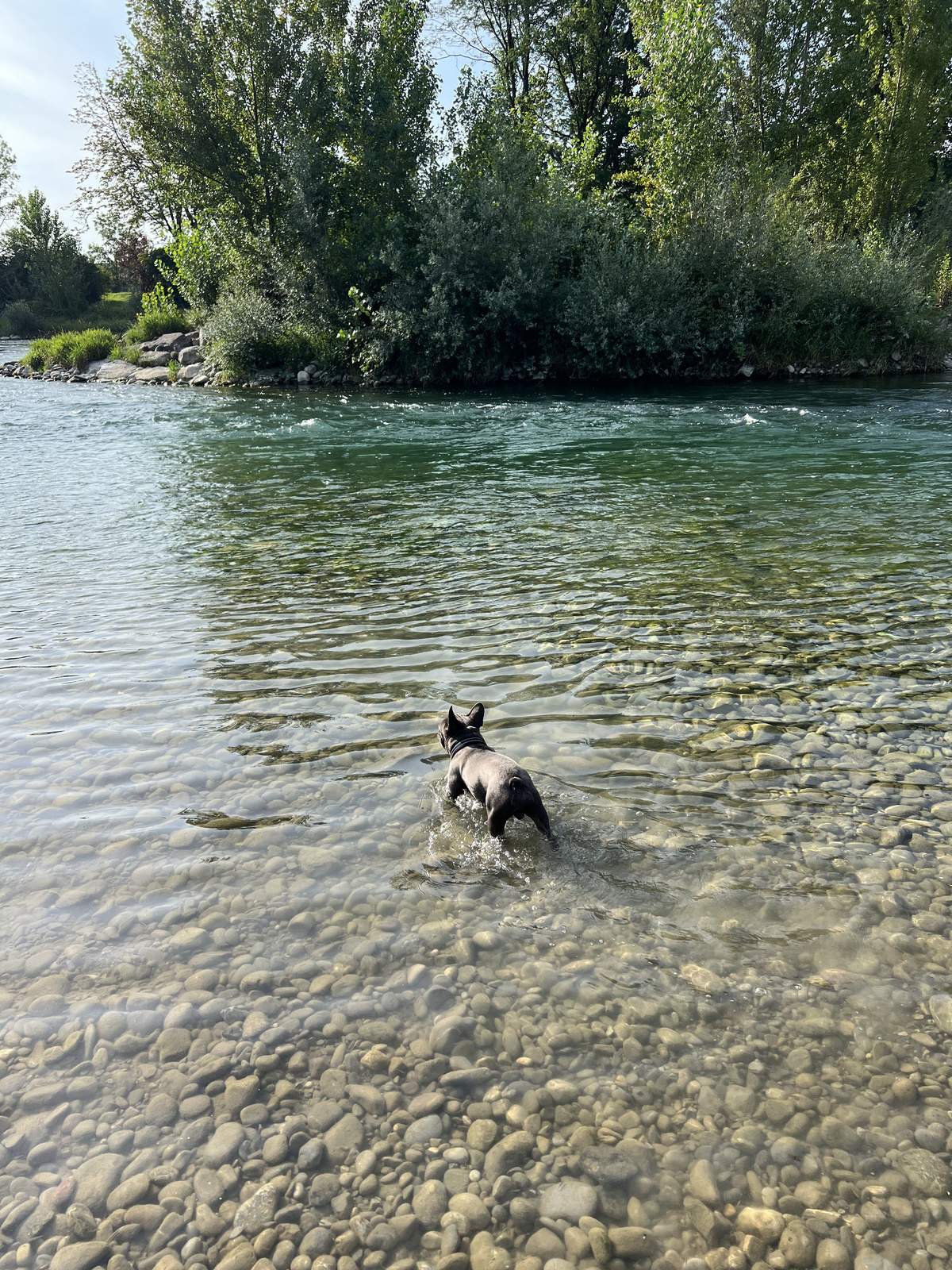 George cooling off in the river. Water access is the best defence against overheating.
Why French Bulldogs Can’t Handle Heat
To understand the danger, you need to understand the mechanics:
Dogs cool themselves primarily through panting. When a dog pants, air moves over the moist surfaces in their nose, mouth, and throat, causing evaporation that dissipates heat. It’s their version of sweating.
French Bulldogs can’t pant efficiently. Their shortened skull means:
- Narrowed nostrils (stenotic nares) restrict airflow
- Elongated soft palate partially blocks the airway
- Smaller trachea limits air volume
- Overall less surface area for evaporative cooling
In practical terms: when a Labrador can cool itself efficiently at 30°C, a French Bulldog is already struggling at 22-24°C. They simply can’t move enough air to regulate their body temperature.
This means Frenchies are at risk of overheating at temperatures most people would consider mild.
Temperature Guidelines for French Bulldogs
| Temperature | Risk Level | Activity Guidelines |
|---|---|---|
| Below 15°C | Low | Normal activity. May need a coat if below 5°C. |
| 15-20°C | Low-Moderate | Normal activity. Watch for heavy panting. |
| 20-24°C | Moderate | Shorten walks. Bring water. Avoid midday sun. |
| 24-28°C | High | Very short walks only (10-15 min). Early morning/late evening only. Cooling vest recommended. |
| 28-32°C | Very High | No outdoor exercise. Quick bathroom breaks only. Indoor play only. |
| Above 32°C | Extreme | Indoor only. Monitor constantly. Air conditioning essential. |
Important: These are guidelines for healthy adult Frenchies. Puppies, seniors, overweight Frenchies, and those with respiratory issues are at risk at even lower temperatures.
Signs of Overheating and Heatstroke
Learn these signs. Memorize them. Heatstroke can progress from “a bit warm” to “life-threatening” in minutes.
Early Warning Signs (Act Immediately)
- Excessive, heavy panting, louder and faster than normal
- Excessive drooling, thick, ropy saliva
- Restlessness or anxiety
- Seeking shade or cool surfaces (lying on tile, digging)
- Bright red tongue and gums
- Rapid heartbeat
Serious Signs (Emergency: Get to a Vet)
- Glazed or unfocused eyes
- Stumbling, loss of coordination
- Vomiting or diarrhea
- Extremely pale or blue-tinged gums (oxygen deprivation)
- Thick, dark red tongue
- Collapse or inability to stand
- Seizures
- Loss of consciousness
Emergency Heatstroke Response
If your Frenchie shows serious heatstroke signs:
- Move to shade/indoors immediately
- Apply cold water to their paw pads, belly, inner thighs, and ears. Use a wet towel, running water, or immerse them in cold water if possible.
- Cold water is safe and recommended. Recent veterinary research (Royal Veterinary College, 2023) has debunked the old myth that ice water causes dangerous vasoconstriction. Cold water immersion is now the gold standard for heatstroke treatment in dogs. The colder the water, the faster the cooling.
- Offer small amounts of cool water. Don’t force them to drink. Small sips only.
- Place cool, wet towels on them. Replace frequently as they warm up.
- Fan them. Airflow increases evaporative cooling.
- Get to a vet immediately. Even if they seem to recover, heatstroke can cause internal organ damage that isn’t visible externally. Always get veterinary assessment.
Critical: Heatstroke can cause kidney failure, brain swelling, and organ damage that may not be apparent for hours or days. Always seek veterinary care after a suspected heatstroke episode, even if your dog appears to recover.
Summer Safety Gear for French Bulldogs
Cooling Vest
A cooling vest is the single most important piece of summer gear for a Frenchie. It provides active temperature regulation during walks and outdoor time.
My recommendation: Ruffwear Swamp Cooler, evaporative cooling with reflective outer layer.
Read my full review: Best Cooling Vests for French Bulldogs
Cooling Mat
For indoor temperature regulation. Gel-based mats absorb body heat without electricity.
My recommendation: Pecute Cooling Dog Mat, pressure-activated, no electricity needed.
Portable Water Bottle
Always carry water on walks. Dog-specific bottles with built-in bowls make drinking easier for flat-faced breeds.
My recommendation: MalsiPree Dog Water Bottle, leak-proof, one-handed operation.
Paw Protection
Hot pavement can burn paw pads. If the ground is too hot for the back of your hand (hold for 5 seconds), it’s too hot for your dog.
Options:
- Dog paw wax/balm: creates a protective barrier
- Dog boots: full protection, but many Frenchies hate them
Elevated Bed
An elevated/cot-style bed allows air to circulate underneath your Frenchie, preventing heat buildup.
My recommendation: Coolaroo Elevated Pet Bed
Daily Summer Routine for French Bulldogs
Here’s what George’s summer schedule looks like:
Morning (Before 8 AM)
- Walk: 15-20 minutes maximum, in shade where possible
- Water: Carry portable water bottle
- Gear: Cooling vest if above 22°C
Midday (10 AM - 5 PM)
- No outdoor activity. Period.
- Indoor play: Puzzle toys, KONG stuffing, training games
- AC or fans: Keep indoor temperature below 22°C
- Cooling mat: Available at all times
- Fresh water: Multiple bowls, refreshed regularly
Evening (After 6 PM)
- Check pavement temperature before going out
- Walk: 15-20 minutes, again in shade
- Cooling vest if still warm
- Cool-down time after walk: offer water, cooling mat, rest
Night
- Cool sleeping area, fan or AC as needed
- Elevated bed or cooling mat
Summer Activities to Avoid
- Long walks in any temperature above 22°C
- Dog parks during midday. Even shaded ones get hot.
- Car travel without AC. Cars heat up to lethal temperatures in minutes. NEVER leave a Frenchie in a parked car, even with windows cracked, even for “just a minute.”
- Fetch or intense play outdoors. Too much exertion too fast.
- Swimming without supervision. Most Frenchies can’t swim. Their heavy front end and short legs make them sink. If near water, use a dog life jacket.
Safe Summer Activities for Frenchies
- Frozen KONG with peanut butter. Mentally stimulating and cooling.
- Shallow kiddie pool. Fill with a few inches of cool water. Most Frenchies love wading (just not swimming).
- Indoor play. Puzzle toys, hide and seek, short training sessions.
- Frozen treats. Freeze dog-safe fruits (blueberries, watermelon) in ice cube trays.
- Early morning/late evening walks. When pavement is cool and sun is low.
- Sniff walks. Short, slow walks where they sniff everything. Mental stimulation without physical exertion.
When to See a Vet
Contact your vet immediately if your Frenchie:
- Has a heatstroke episode (even if they seem to recover)
- Shows persistent heavy panting that doesn’t improve with cooling
- Has any breathing changes during summer that weren’t present before
- Stops eating or drinking in warm weather
- Shows signs of sunburn (red, inflamed skin on nose, ears, or belly)
Summer-Proofing Checklist
- Cooling vest purchased and tested
- Cooling mat set up indoors
- Portable water bottle for walks
- Walk schedule adjusted (early morning/late evening only)
- AC or fans adequate for indoor cooling
- Frozen KONGs and treats prepared
- Car emergency kit (water, towel, portable fan)
- Vet’s emergency number saved in phone
- Pet first aid knowledge refreshed
- Family/household educated on heatstroke signs
Last updated: February 2026. This guide is for informational purposes. Always consult your veterinarian for medical advice specific to your dog.