This article contains affiliate links. If you purchase through these links, we may earn a small commission at no extra cost to you.
If you have a French Bulldog with allergies, I want you to know something upfront: it gets better. But first, it’s going to be frustrating, expensive, and confusing. You’ll Google at 2am. You’ll try seventeen different things. You’ll feel like a terrible dog parent at least once a week.
I know this because George and I lived it.
When It Started
George was barely 6 months old when the first signs appeared. It started with scratching, not the normal dog scratch, but the kind where he’d go at his ears and paws obsessively, like something was crawling under his skin.
Then came the red, irritated skin between his wrinkles. Then the paw licking, endless, loud, middle-of-the-night paw licking. His belly turned pink, then red. His ears smelled funky no matter how often I cleaned them.
At 6 months old, my puppy was already miserable. And so was I.
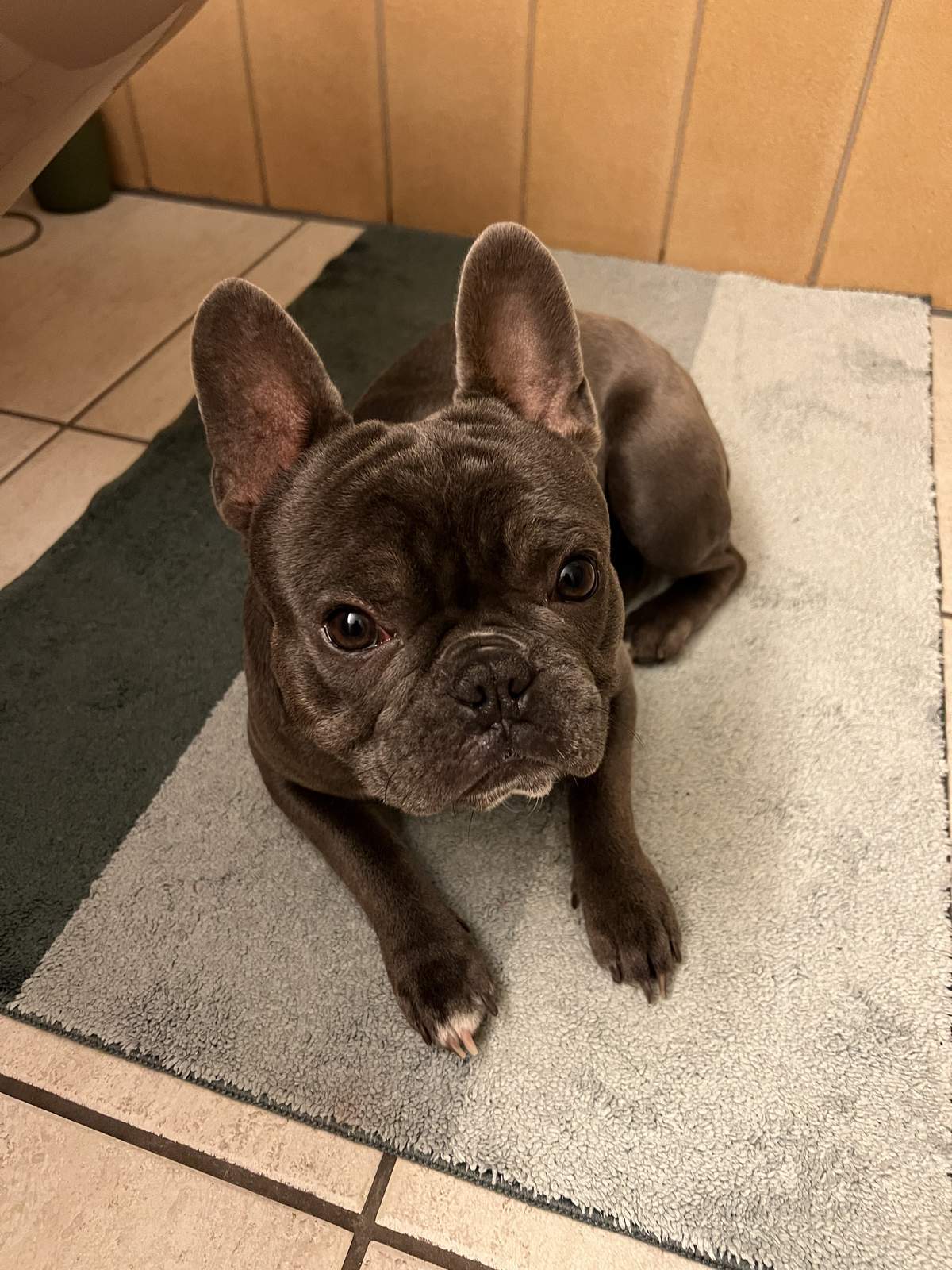
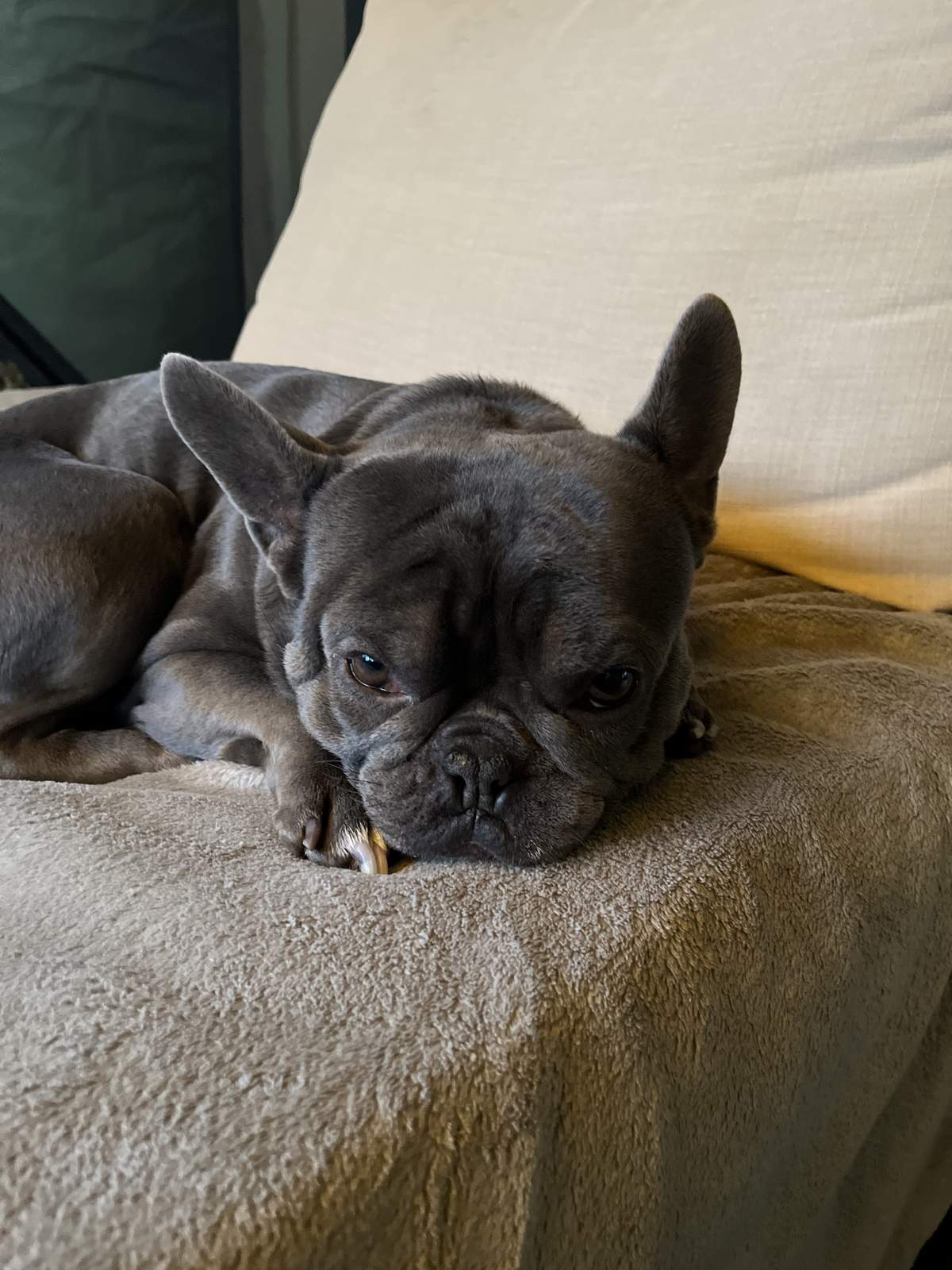 George on a good day, calm, comfortable, and not scratching. Getting here took months.
The Vet Visits (So Many Vet Visits)
Our vet confirmed what I suspected: allergies. But here’s the thing nobody tells you, figuring out what your Frenchie is allergic to is like playing detective with no clues.
French Bulldogs can be allergic to:
- Food ingredients. Chicken, beef, wheat, corn, soy, dairy, eggs
- Environmental allergens. Pollen, dust mites, mould, grass
- Contact allergens. Cleaning products, certain fabrics, floor treatments
- Or (and this is the fun part) a combination of all of the above
The vet gave us some initial medication, suggested a food change, and told us to “monitor.” If you’ve heard that word from a vet before, you know how helpful it feels.
6 Months of Trial and Error
What followed was six months of systematically trying to figure out what was making George miserable. Here’s the honest timeline:
Month 1-2: Food Elimination
We started by eliminating the most common allergens from George’s diet. Switched from his regular kibble to a hydrolysed protein diet (the vet-prescribed kind that tastes like cardboard and costs like caviar).
Result: Marginal improvement. Less belly redness, but still scratching.
Month 2-3: Environmental Changes
We deep-cleaned everything. New detergent (fragrance-free). Washed his bedding twice a week. Got an air purifier. Wiped his paws after every walk.
Result: Helped a bit with the paw irritation, but the ear issues and general itchiness persisted.
Month 3-4: Different Food Trials
Tried several limited-ingredient diets. Went through fish-based, lamb-based, and duck-based formulas. The problem with food trials is they take weeks to show results, you can’t just switch for three days and draw conclusions.
Result: The fish-based food seemed slightly better. Filed that away.
Month 4-5: Medication Adjustments
Our vet introduced Apoquel (oclacitinib). This was the first time I saw George genuinely comfortable. Within 48 hours, the scratching reduced dramatically. The redness started fading. He slept through the night without licking his paws.
Result: Game-changer. But we didn’t want to rely on daily medication forever if we could find the right food combination.
Month 5-6: Finding the Sweet Spot
With the itching under control from Apoquel, we could actually do proper food trials without George being miserable throughout. We landed on monoprotein, grain-free food. A single animal protein source with no wheat, corn, or other grains.
Result: This was the missing piece.
What Works for George Now
After 6 months of trial and error, here’s George’s allergy management routine:
Apoquel Every Other Day
George takes Apoquel (oclacitinib) every other day instead of daily. This was something we worked out with our vet over time, starting daily, then gradually spacing it out to find the minimum effective dose.
Important: Apoquel is a prescription medication. Don’t adjust dosing without your vet’s guidance. What works for George may not work for your dog.
Every-other-day dosing keeps his immune response in check without over-suppressing it. On his “off” days, he’s comfortable. No scratching, no red skin, no ear issues.
Monoprotein, Grain-Free Diet
George eats monoprotein food. Meaning each meal contains only one animal protein source. No chicken-and-fish combos, no mystery “meat meal” blends. One protein. That’s it.
Why monoprotein works:
- Easier to identify triggers. If he reacts, you know exactly what caused it
- Less immune system stimulation. Fewer novel proteins = fewer potential reactions
- Consistent digestion. His gut stays happy and predictable
The grain-free part matters too. While the “grain-free is dangerous” debate rages on (mostly around DCM concerns in certain breeds), for allergy-prone Frenchies, removing grains often removes a significant source of irritation. Our vet supported this choice given George’s specific allergy profile.
The Routine
Here’s what a typical day looks like:
- Morning: Monoprotein grain-free kibble + Apoquel (every other day)
- After walks: Quick paw wipe to remove pollen and irritants
- Evening: Same food, sometimes with a monoprotein wet food topper
- Weekly: Ear cleaning with a gentle, vet-approved solution (we use Virbac Epi-Otic it’s the gold standard for routine ear maintenance)
- Bi-weekly: Bath with a hypoallergenic, fragrance-free shampoo
- Monthly: Vet check-in (now down to quarterly since he’s stable)
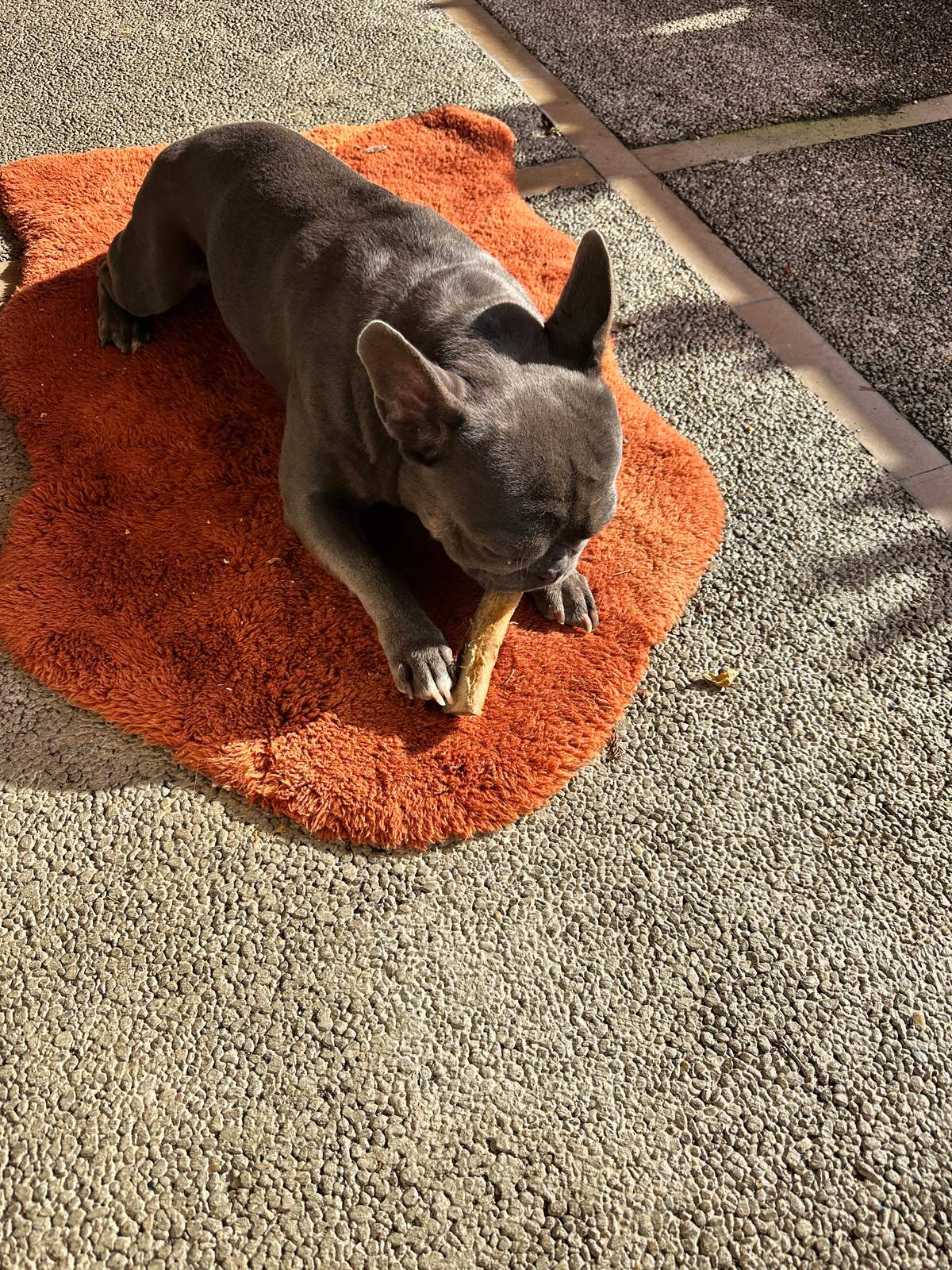 George enjoying a natural chew, treats also need to be single-protein to avoid triggering allergies
Signs Your French Bulldog Might Have Allergies
If your Frenchie is showing any of these, talk to your vet:
- Excessive scratching, especially ears, paws, and belly
- Red or inflamed skin, particularly in skin folds and between toes
- Chronic ear infections or funky-smelling ears
- Obsessive paw licking (especially at night)
- Hair loss in patches
- Recurrent hot spots
- Watery eyes or frequent eye discharge
- Digestive issues. Vomiting, diarrhoea, or excessive gas (more than the usual Frenchie amount, which is already impressive)
George had almost all of these at his worst. Now he has none.
What I Wish Someone Had Told Me
1. It Takes Time. And That’s Normal
Six months felt like forever when we were in it. Every new food trial meant weeks of waiting. Every vet visit meant more money and more “let’s try this.” But allergies aren’t a quick fix. If someone promises you a miracle cure, they’re selling something.
2. Food and Environment Usually Work Together
It was never just food or just environment for George. It was the combination of the right food AND reduced environmental irritants AND medication that finally cracked it. Don’t expect one change to fix everything.
3. Apoquel Isn’t a Failure
I resisted medication for months because I wanted to “fix” the problem naturally. Looking back, I wish I’d started Apoquel sooner. Watching your dog suffer while you slowly eliminate variables is brutal. Medication gave George comfort while we figured out the rest.
4. Grain-Free Isn’t One-Size-Fits-All
Grain-free works for George. It might not work for your dog. Some Frenchies do fine with certain grains. The key is working with your vet and doing proper elimination trials, not just grabbing the first “grain-free” bag at the pet store.
5. Keep a Log
I started writing down everything, what George ate, when he scratched, what the weather was like, whether we’d walked through tall grass. It felt obsessive, but patterns emerged. Patterns your vet can actually use.
The Cost Reality
Let’s be honest about money, because nobody talks about it:
- Vet visits during the diagnostic phase: CHF 800-1,200 over 6 months
- Specialty foods during elimination trials: roughly double the cost of regular kibble
- Apoquel: varies by country, but expect CHF 60-90/month for a Frenchie-sized dose (every-other-day dosing helps reduce this)
- Ongoing maintenance (food, supplements, grooming products): CHF 150-200/month
It’s not cheap. But a comfortable, happy dog who isn’t destroying his own skin is priceless. And once you find what works, the costs stabilise.
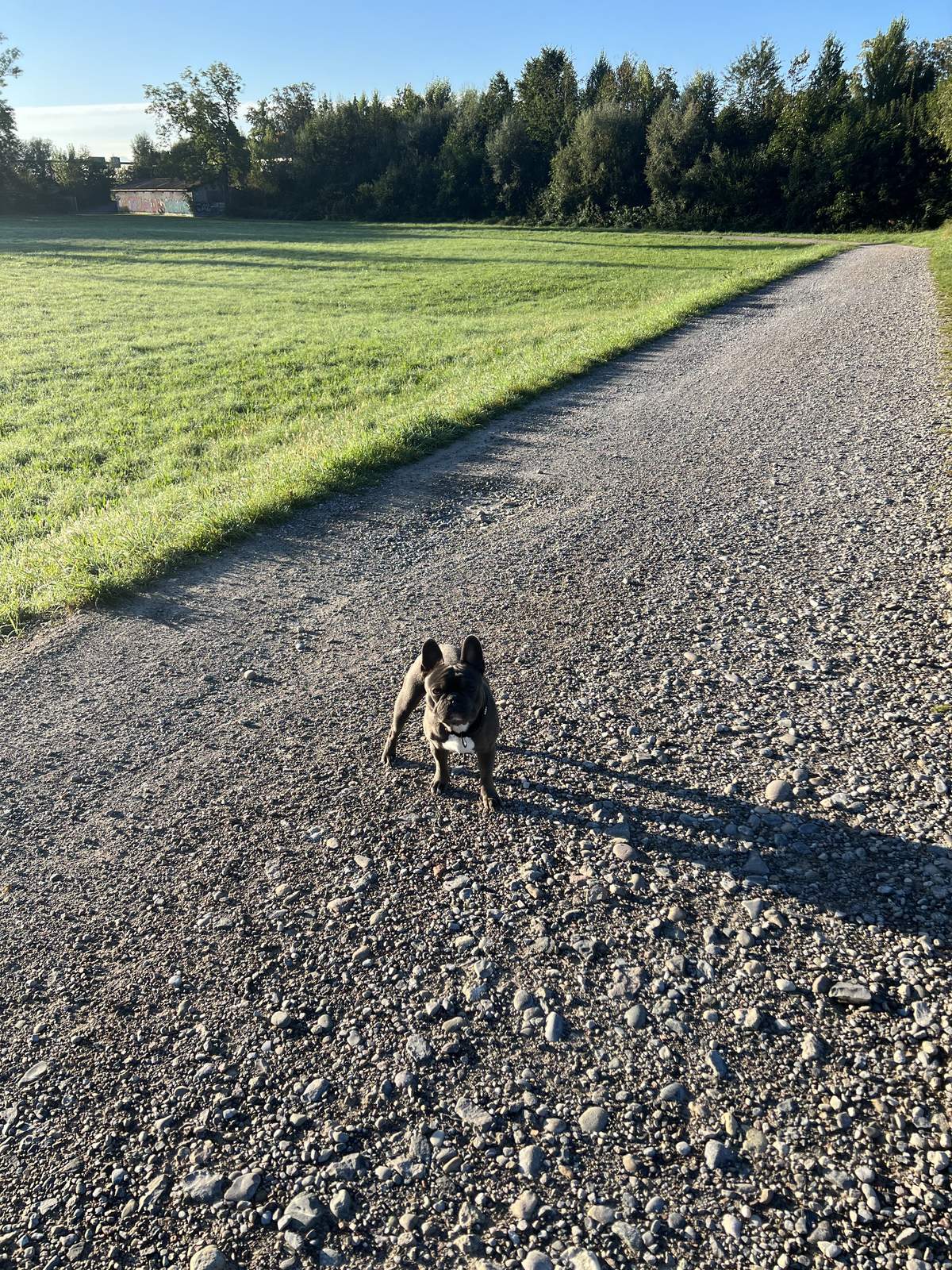 George now, comfortable, happy, and allergy-managed. The scratching days are behind us.
When to See the Vet (Again)
Even with a good management routine, watch for:
- Breakthrough scratching. The current routine might need adjusting
- Seasonal flare-ups. Environmental allergies can worsen in spring/autumn
- New symptoms. Allergies can evolve over time
- Side effects from medication. Apoquel is generally well-tolerated, but regular blood work is recommended for long-term use
The Bottom Line
French Bulldog allergies are common, frustrating, and expensive. There’s no getting around that. But they’re also manageable. Once you find the right combination of food, environment, and (sometimes) medication.
George went from a miserable, itchy 6-month-old puppy to a comfortable, happy dog with a routine that works. It took 6 months of trial and error to get there. Some dogs take longer. Some get lucky faster.
If you’re in the middle of it right now, hang in there. Keep the log. Trust your vet. And don’t feel guilty about medication if your dog needs it.
George is living proof that the other side exists. And it’s a pretty good side. 🐶
Have a Frenchie with allergies? I’d love to hear what worked for you, drop me an email at hello@thefrenchie.life. Every dog is different, but shared experience helps us all.